Stakeholder research
Information architecture & user flows
Wireframing & prototyping
Interaction design
Responsibilities:
Role: Product Designer
Duration: Oct-Dec 2022 & Apr-Oct 2023
Team: Product Manager, 2 Product Designers, 3 Engineers
Client: NFL League Office
Project Context:
How the partnership began:
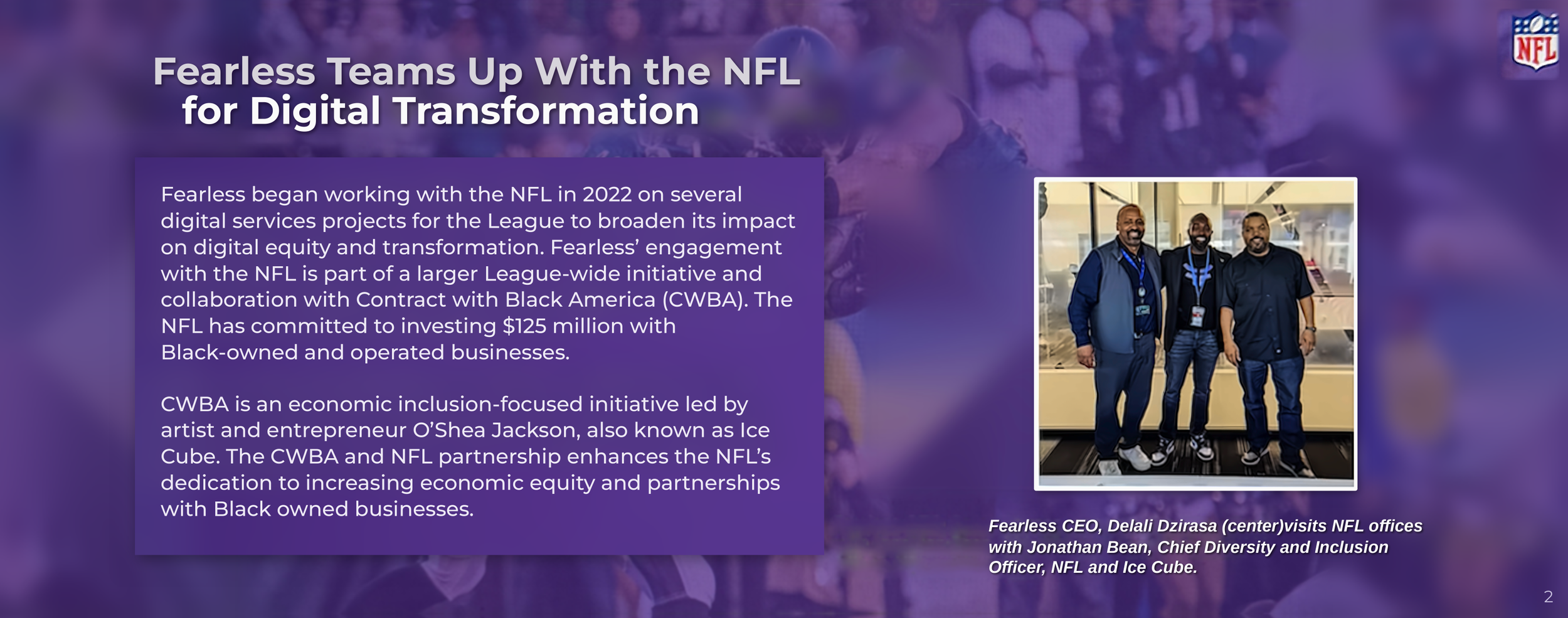
Fearless began partnering with the NFL in 2022 across several digital transformation initiatives as part of the League's broader efforts to expand opportunities for Black-owned businesses. This partnership ultimately brought our team into NFL Football Operations. My work within this partnership focused on the NFL Football Operations Database.
The hiring process for NFL candidates was slow, outdated, and inefficient.
THE PROBLEM
Candidate information was stored across manual spreadsheets, emails, and outdated processes, leading to inefficiencies.
Lack of centralized access control created security risks and made it difficult to manage sensitive candidate data.
DISORGANIZED DATA & SECURITY RISKS
LIMITED SEARCH & INCONSISTENT RECORDS
No true search functionality made it difficult to identify candidates based on role, experience, or availability.
Fragmented data storage led to inconsistent and outdated records, slowing down hiring decisions.
A streamlined, centralized database that made candidate management faster and easier for recruiters.
THE SOLUTION
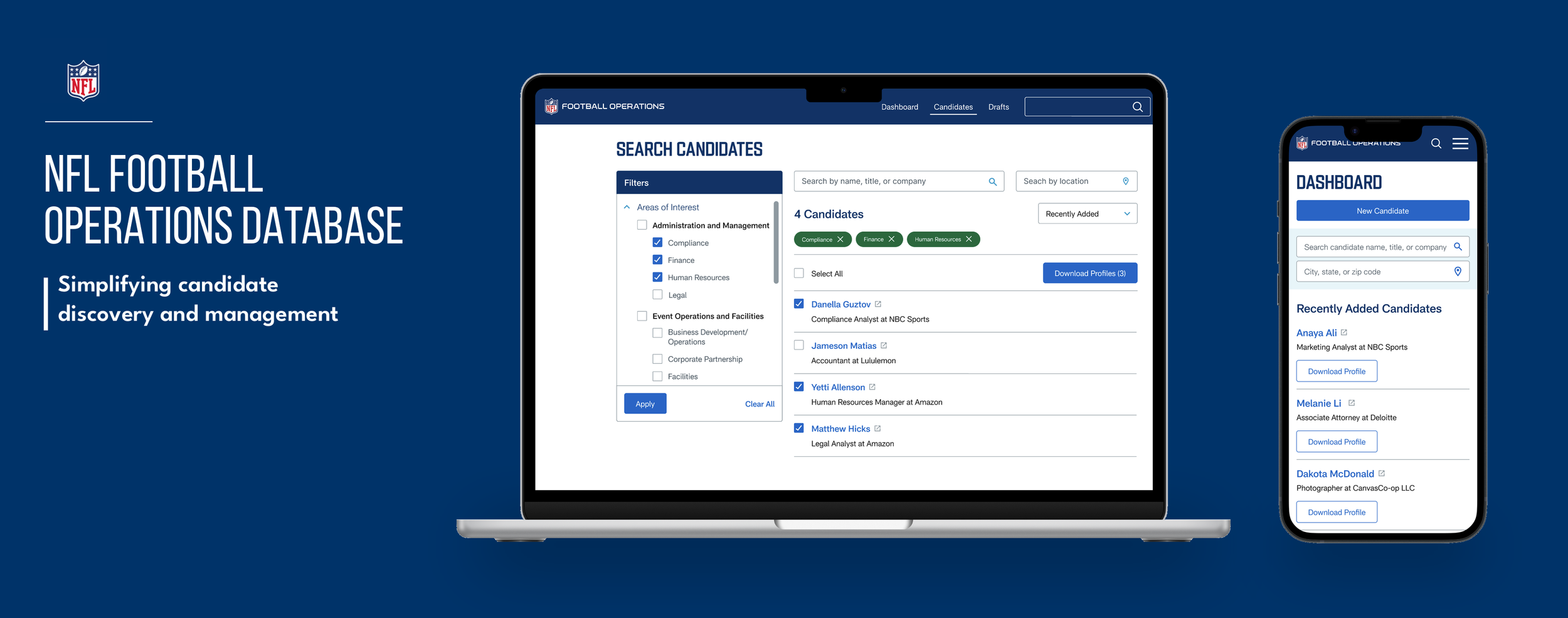
Redesigned candidate profiles to improve readability and make key information easier to scan.
Introduced a drafts experience that allowed recruiters to save incomplete candidate submissions and return to them later.
Improved search and filtering to help recruiters quickly find candidates based on specific criteria.
Designed one-click PDF exports to make candidate profiles easier to download and share.
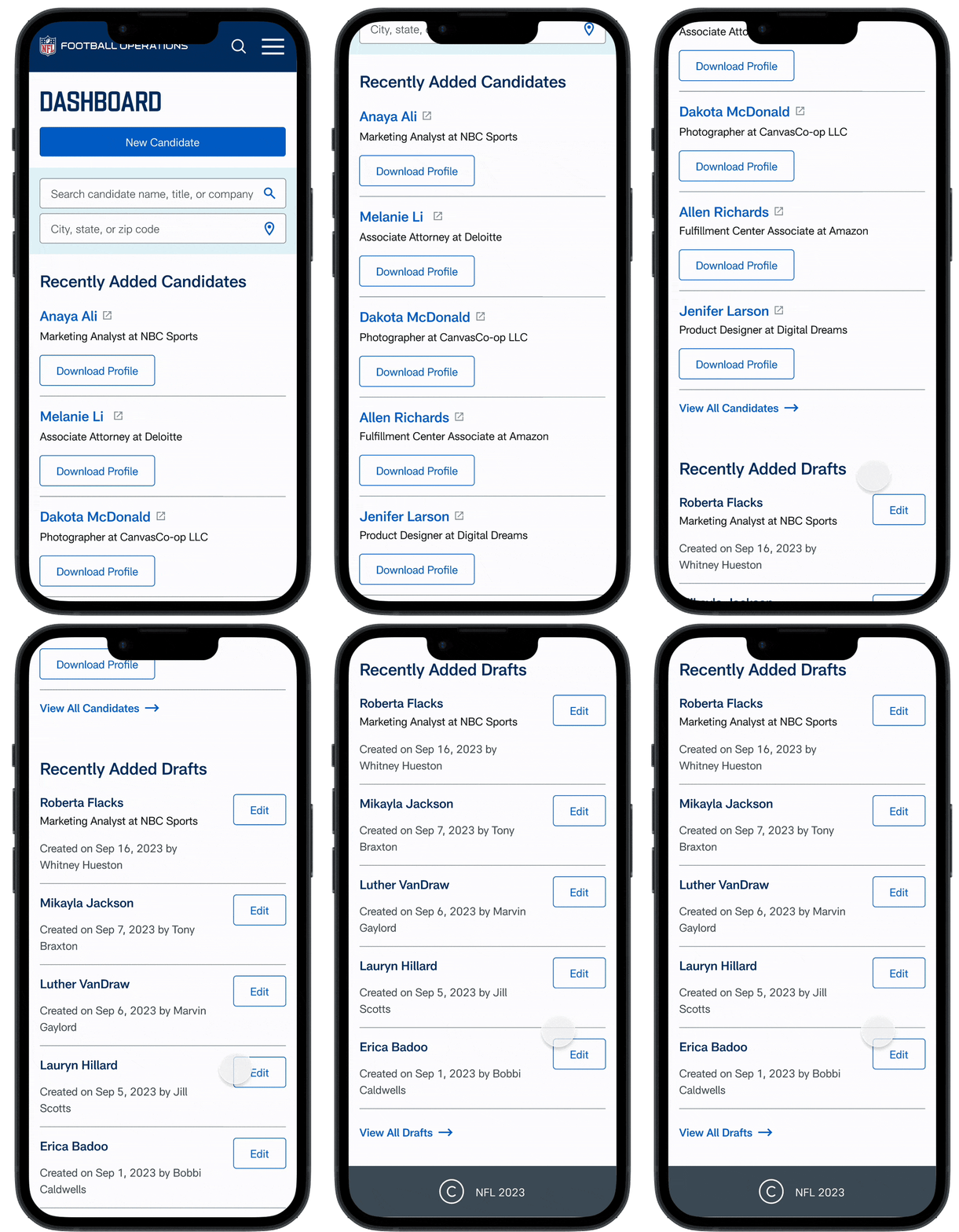
RECRUITER DASHBOARD
THE RESEARCH
Uncovering Pain Points Through Stakeholder Insights
Through stakeholder interviews, my team identified recurring friction in the NFL’s hiring workflow: limited search capabilities, cumbersome candidate management, reliance on IT for routine updates, and fragmented candidate information.
Discovery also revealed different access needs across user types, which informed the permissions and workflows we considered as we moved into design.
I used these insights to inform my design decisions, prioritizing easier candidate discovery, streamlined profile management, and a more centralized experience.
THE RESEARCH
Defining the Information Architecture
Before designing the interface, we used stakeholder insights to define the information recruiters needed to find, create, and manage candidate profiles. This framework shaped the product’s core structure and workflows.
KEY EXPERIENCES
Search & Discovery: Find and filter candidates using relevant criteria.
Candidate Profiles: View, edit, manage, and export candidate information.
Profile Creation: Create, save, and return to candidate profiles as needed.
THE RESEARCH
Mapping the User Experience
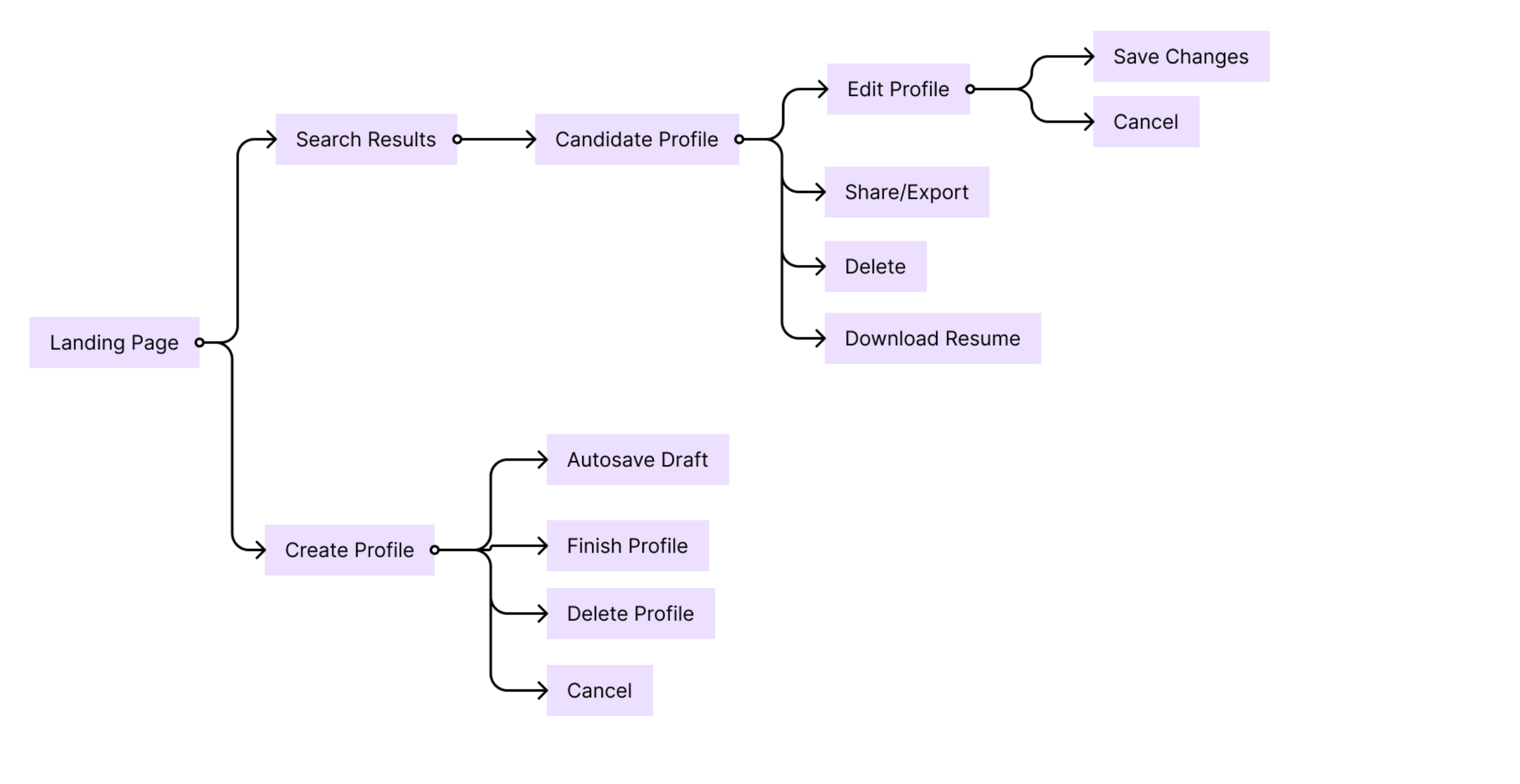
I mapped the core user flows to understand how recruiters would move between candidate discovery, profile management, and profile creation.
This helped me define key interactions, decision points, and role-based permissions before moving into interface design.
LOW FIDELITY WIREFRAMES
Sketching efficient flows.
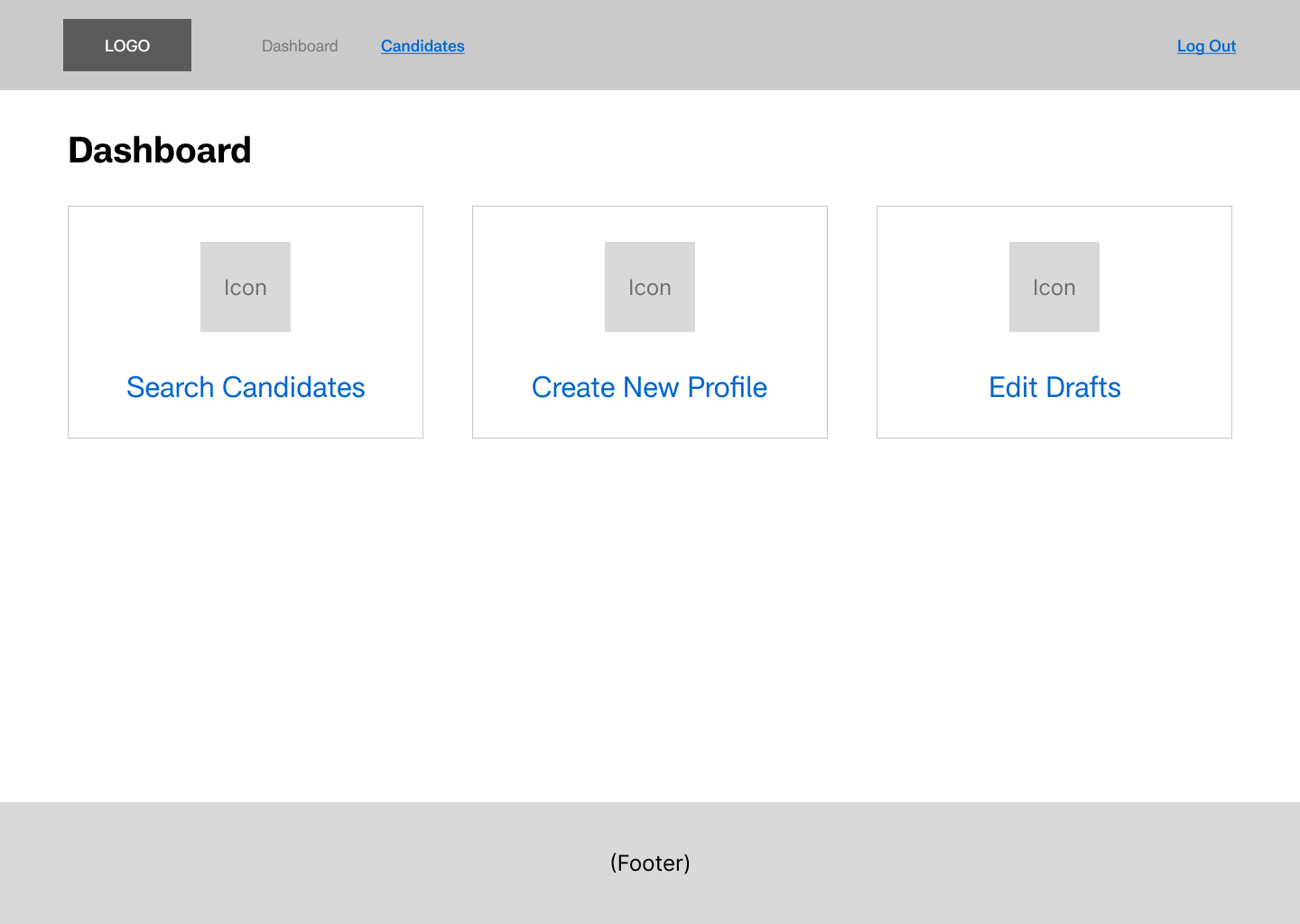
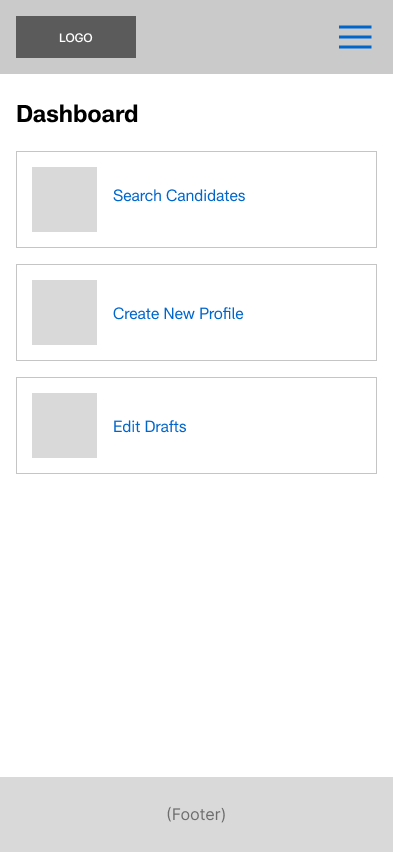
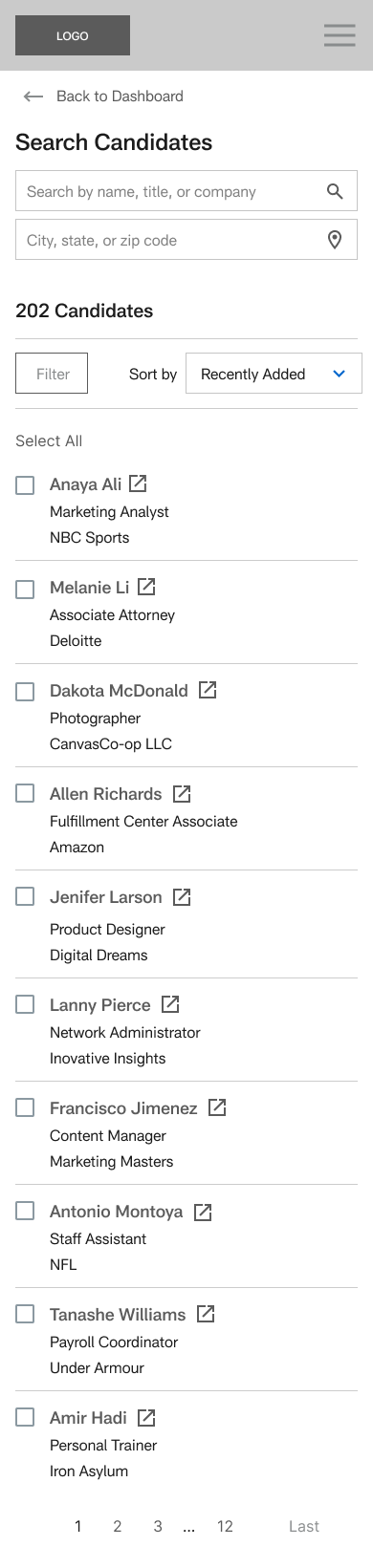
I translated the core workflows into low-fidelity wireframes, exploring how recruiters could search for candidates, create profiles, and return to saved drafts across desktop and mobile. Starting at low fidelity allowed me to align with stakeholders on the structure and key interactions before investing in visual design.
DESIGN SYSTEM AND UI COMPONENTS
Maintaining Consistency
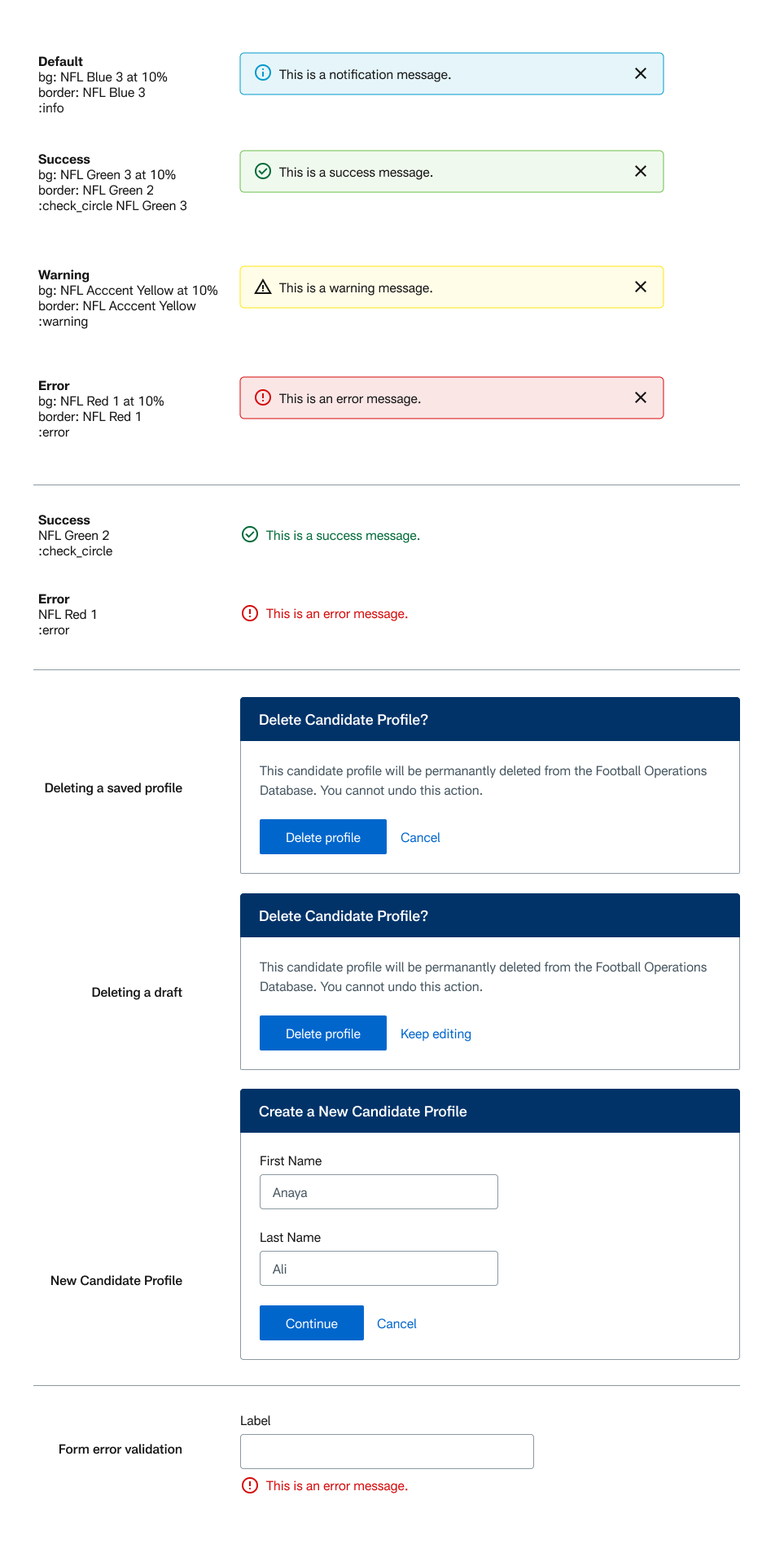
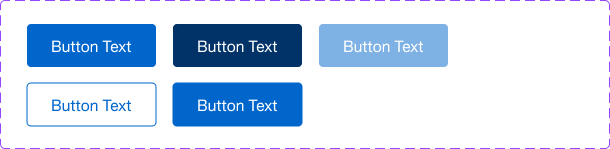
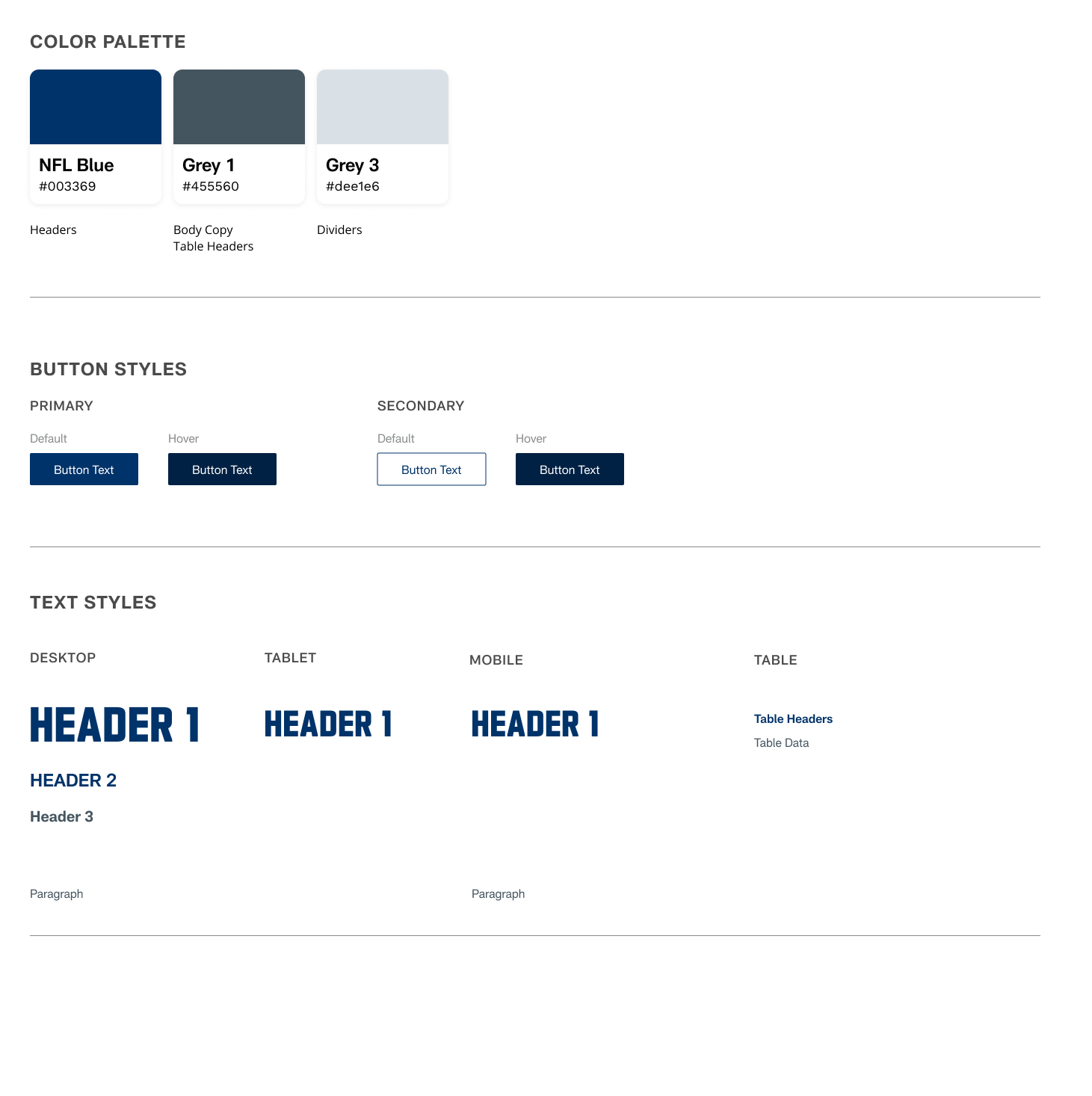
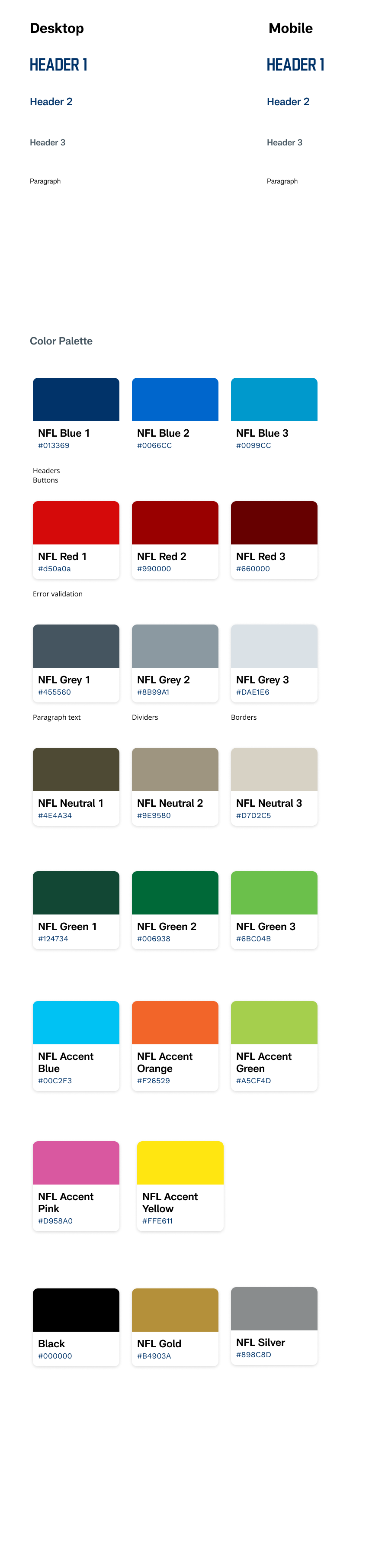
We used a reusable component library aligned with NFL brand guidelines to maintain consistency across the experience.
DESIGN EXPLORATION
Iterating on the Candidate Form
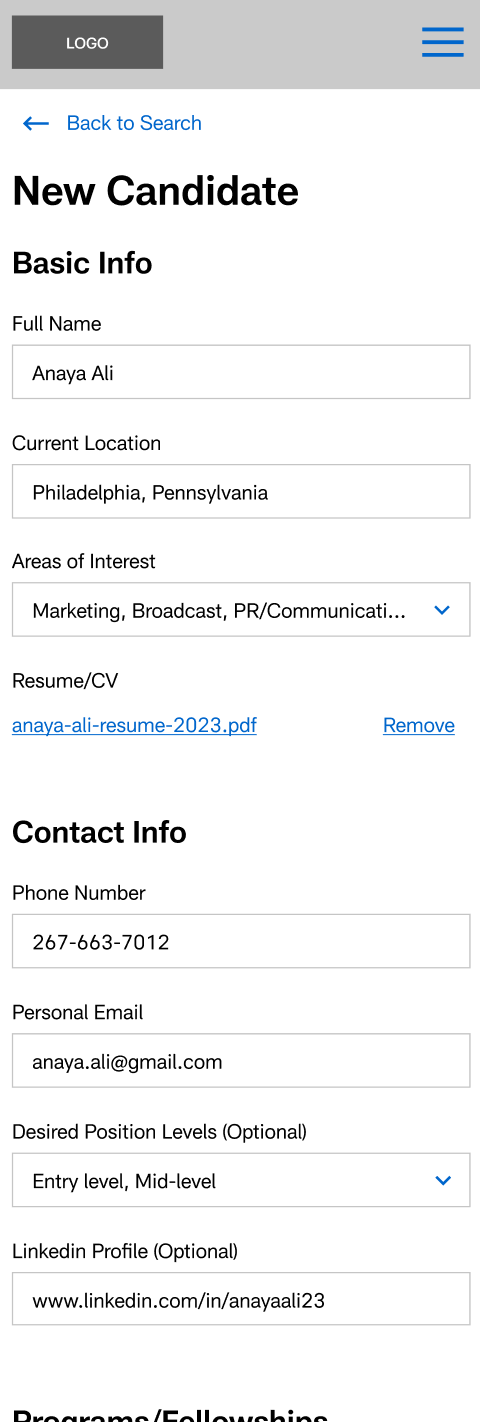
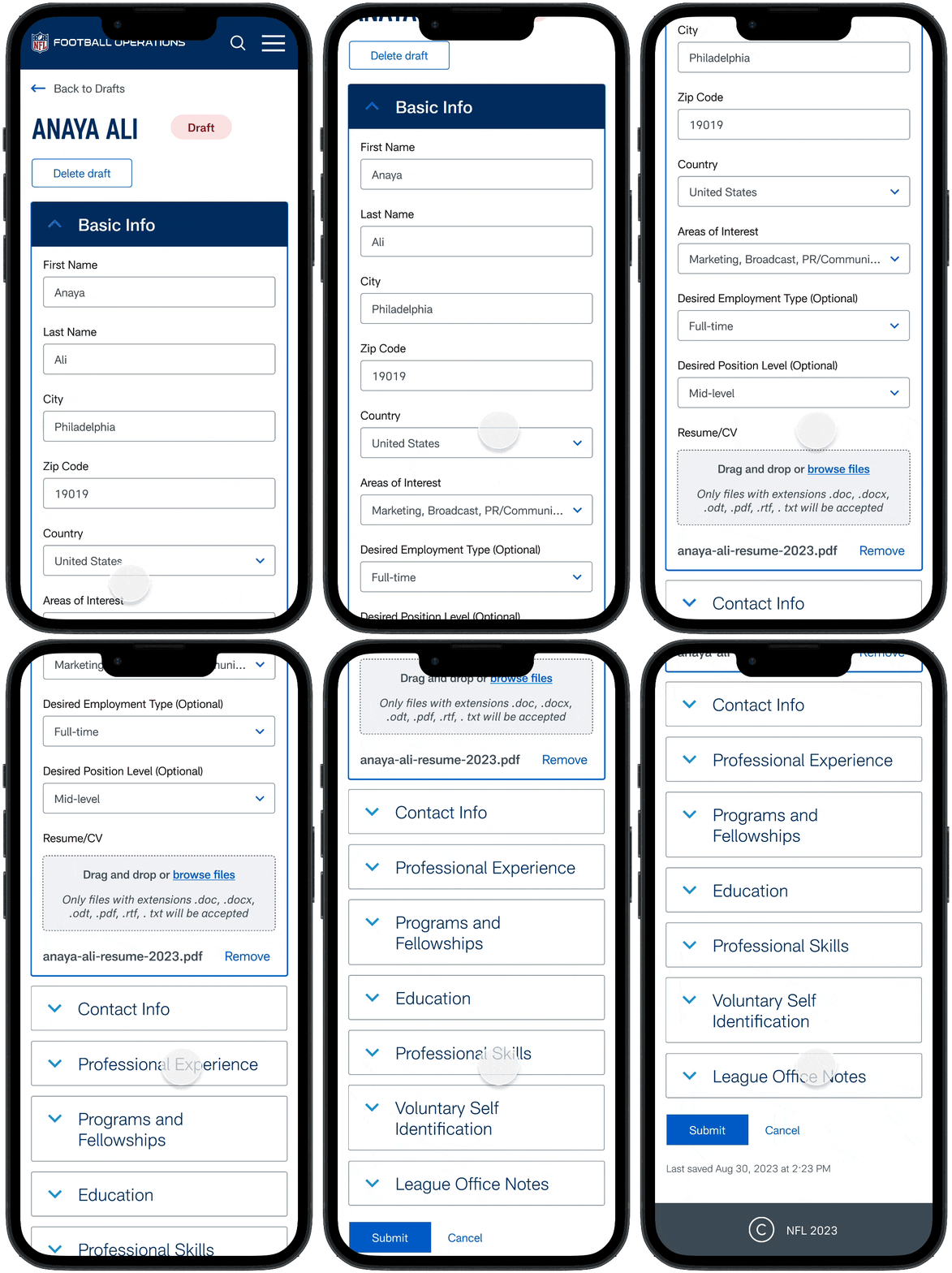
The candidate profile form was one of the most complex parts of the redesign. It needed to capture detailed information for hiring decisions while remaining manageable for NFL staff, including less technical users. Early iterations felt dense and overwhelming, so I focused on reducing the cognitive load of completing a lengthy form without sacrificing the information recruiters needed.
Created clear sections for personal info, experience, programs, and self-ID.
Added auto-save to prevent data loss and reduce user frustration.
Reworked layout to feel less cluttered with better spacing and section headers.
Moved sensitive fields (like demographics) to the end to reduce friction.
Designed with mobile users in mind by minimizing visible fields per screen.
KEY OUTCOMES
DESIGN EXPLORATION
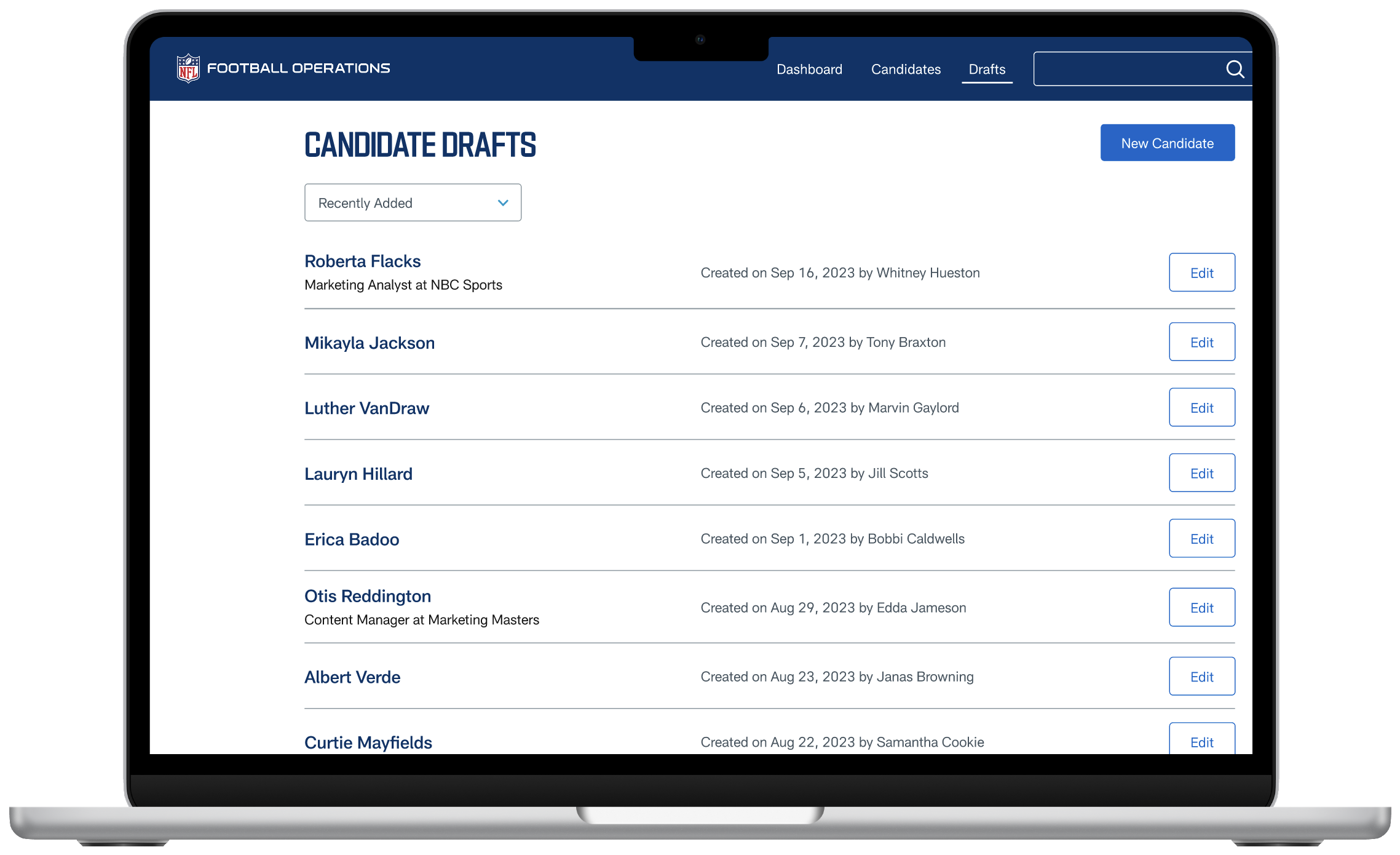
While designing the candidate form, I noticed there was no way to save an incomplete profile—a significant limitation given the amount of information recruiters needed to enter. I proposed a dedicated Drafts experience that would allow users to pause their work and return without starting over. After I presented the use case to stakeholders, the feature was approved and incorporated into the candidate-management workflow
Adding the drafts
Gave recruiters a way to save and resume incomplete candidate profiles.
Became a frequently used feature during peak hiring periods.
Reduced friction around managing lengthy candidate submissions.
Key Outcomes
DESIGN EXPLORATION
Search built around recruiter needs
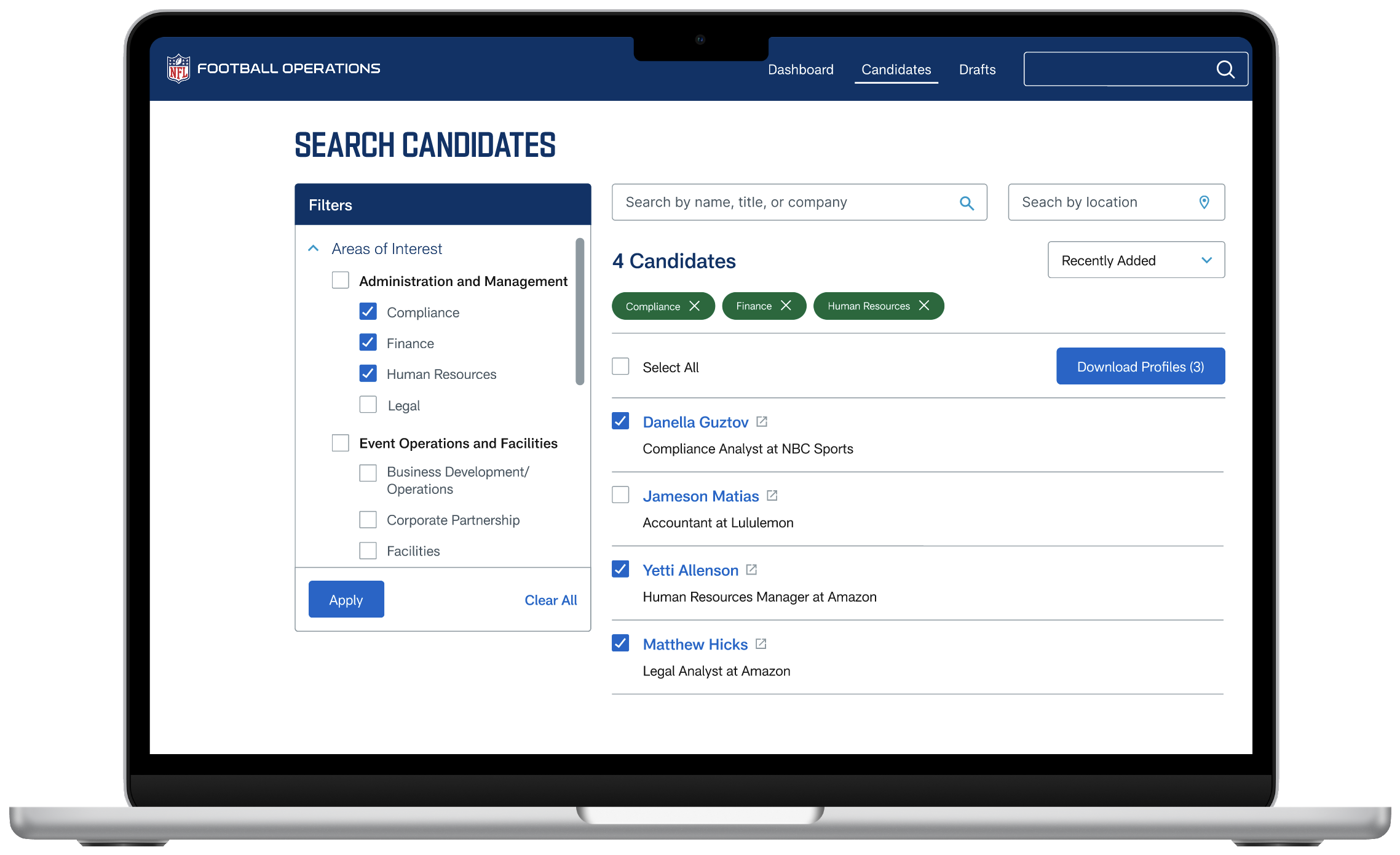
We designed a flexible search experience that helped recruiters narrow a large candidate pool using relevant criteria such as location, areas of interest, employment type, position level, programs, and education. Combining keyword search with structured filters made it easier to focus on candidates who matched specific hiring needs.
CHALLENGES, LEARNINGS, AND NEXT STEPS
What I learned for next time
Build user validation into the process when possible. Stakeholder feedback guided our design decisions, but we still had questions that needed validation with end users. Usability testing was planned for Phase III, but budget constraints prevented the project from continuing into that phase.
Simplify the experience, not necessarily the information. The candidate form required a lot of data, so removing fields wasn’t always an option. I learned to reduce perceived complexity through clearer grouping, hierarchy, and progressive disclosure instead.
Treat stakeholder feedback as an input, not a list of changes. Regular feedback from Football Operations taught me to understand the need behind a request and translate it into solutions that balance stakeholder goals with usability.